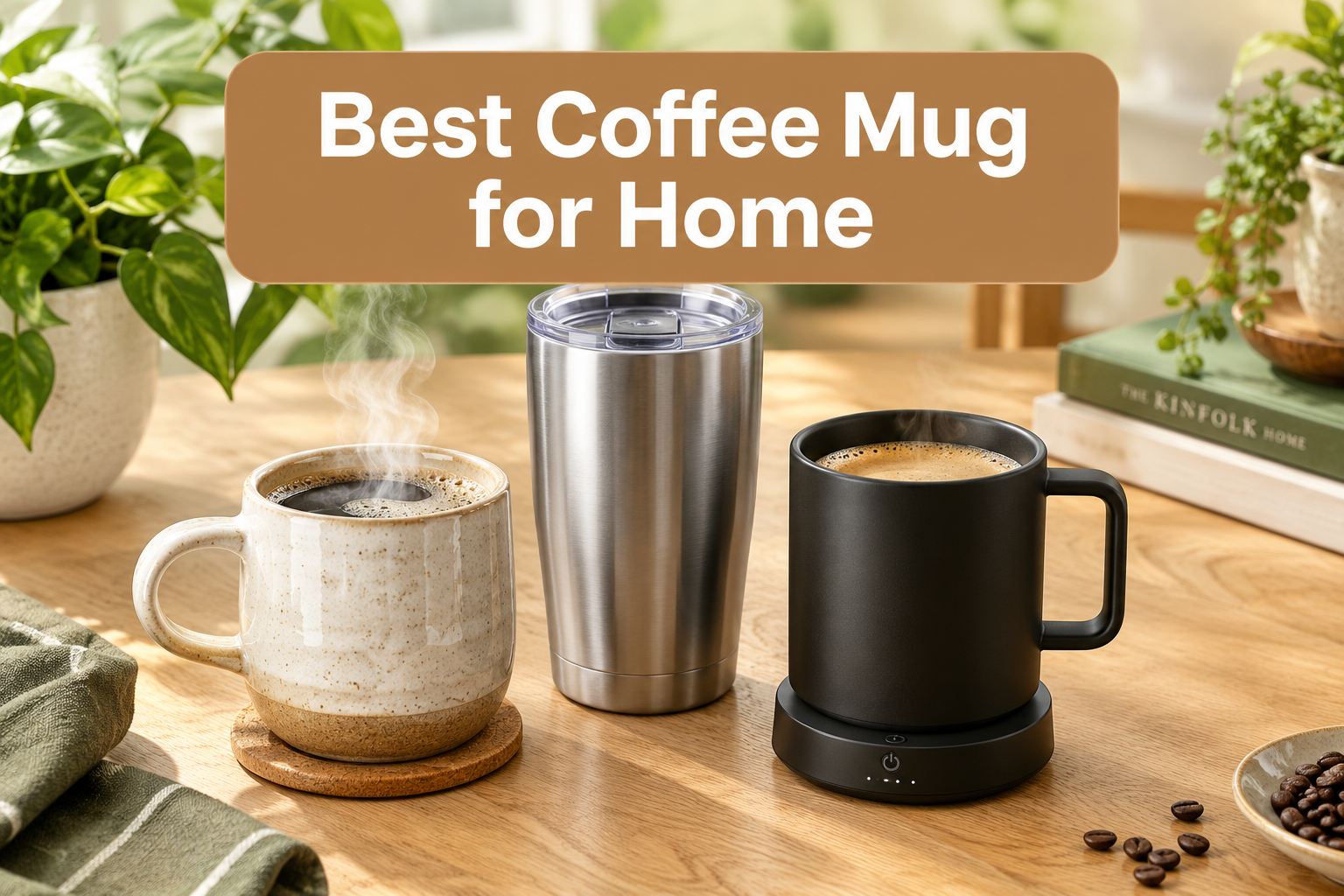
Best Coffee Mug for Home: Ceramic, Insulated, and Heated Picks
Quick Answer
The best coffee mug for most home drinkers is a ceramic mug like KINTO or Hasami for daily sipping, paired with a vacuum insulated stainless mug like the YETI Rambler or Klean Kanteen TKWide for anyone who takes an hour to finish a cup. If you drink slowly at a desk, a heated coffee mug such as the Ember Mug 2 solves a different problem entirely: it holds a set temperature instead of just slowing heat loss.
Key Takeaways
- A ceramic coffee mug wins on taste and comfort for the first ten minutes, then loses the heat battle to insulated steel.
- A double wall coffee mug made of vacuum sealed stainless steel can keep coffee drinkable for 6 to 14 hours depending on the model.
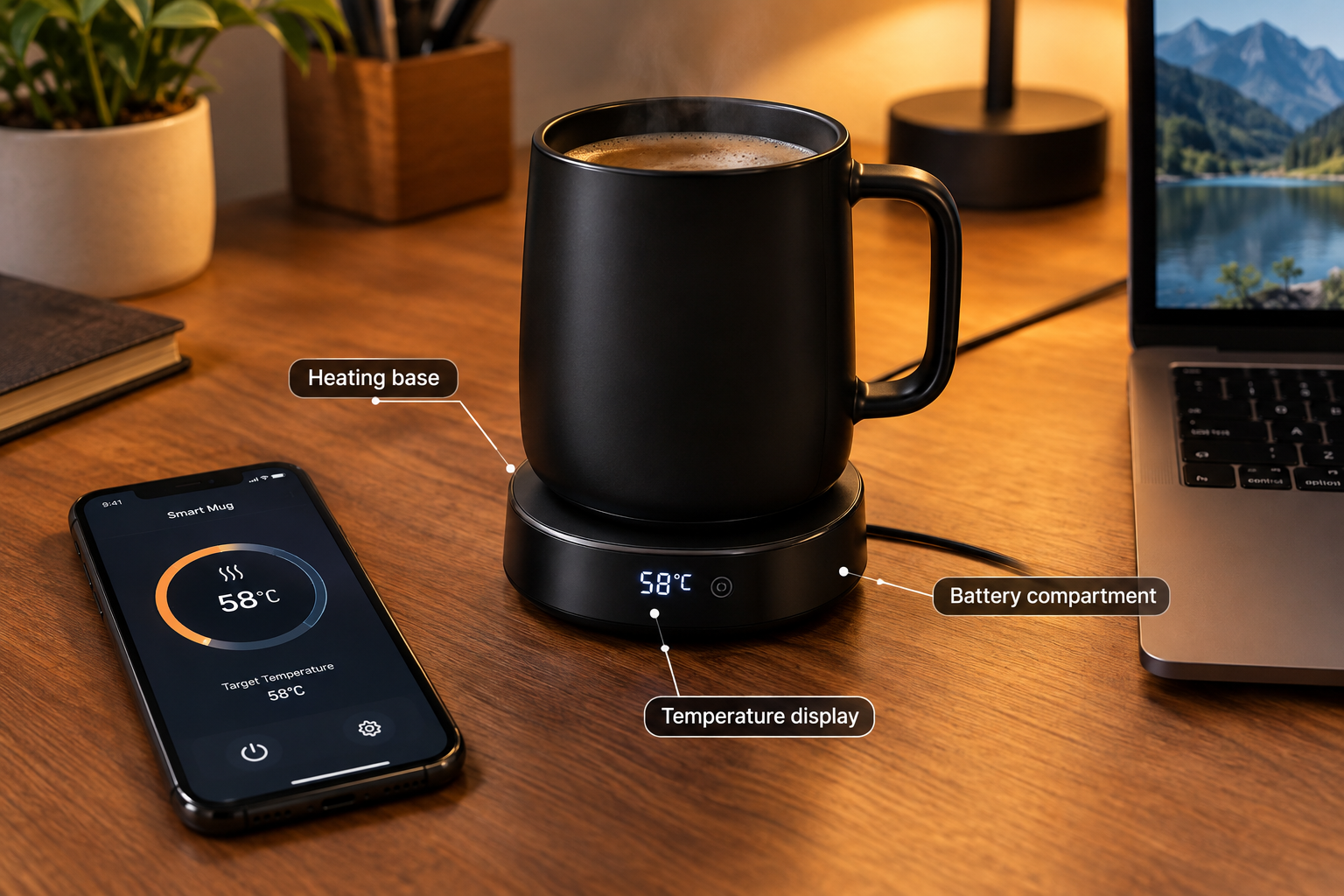
- The Ember Mug 2 and similar heated mugs use a battery and heating element to hold a chosen temperature rather than raise a cold drink to hot.
- Ember's own newer model, the Mug 3, can over-extract coffee and dull fruity notes when set too hot for too long, according to hands-on testing.
- Mug capacity for home use runs from 6 ounces for espresso to 20 ounces for oat milk lattes.
- Expensive mugs earn their price through insulation performance, lid engineering, or app control, not through the logo on the side.
- People with arthritis or limited grip strength do better with lighter double wall mugs or mugs with wide, D-shaped handles.
- Ceramic and glass survive daily use fine at home; they fail mostly from drops, not from age.
Best Coffee Mug for Home: Quick Verdict by Buyer Type
The best coffee mug depends on how you drink, not just what you drink. Pick by habit first, brand second.
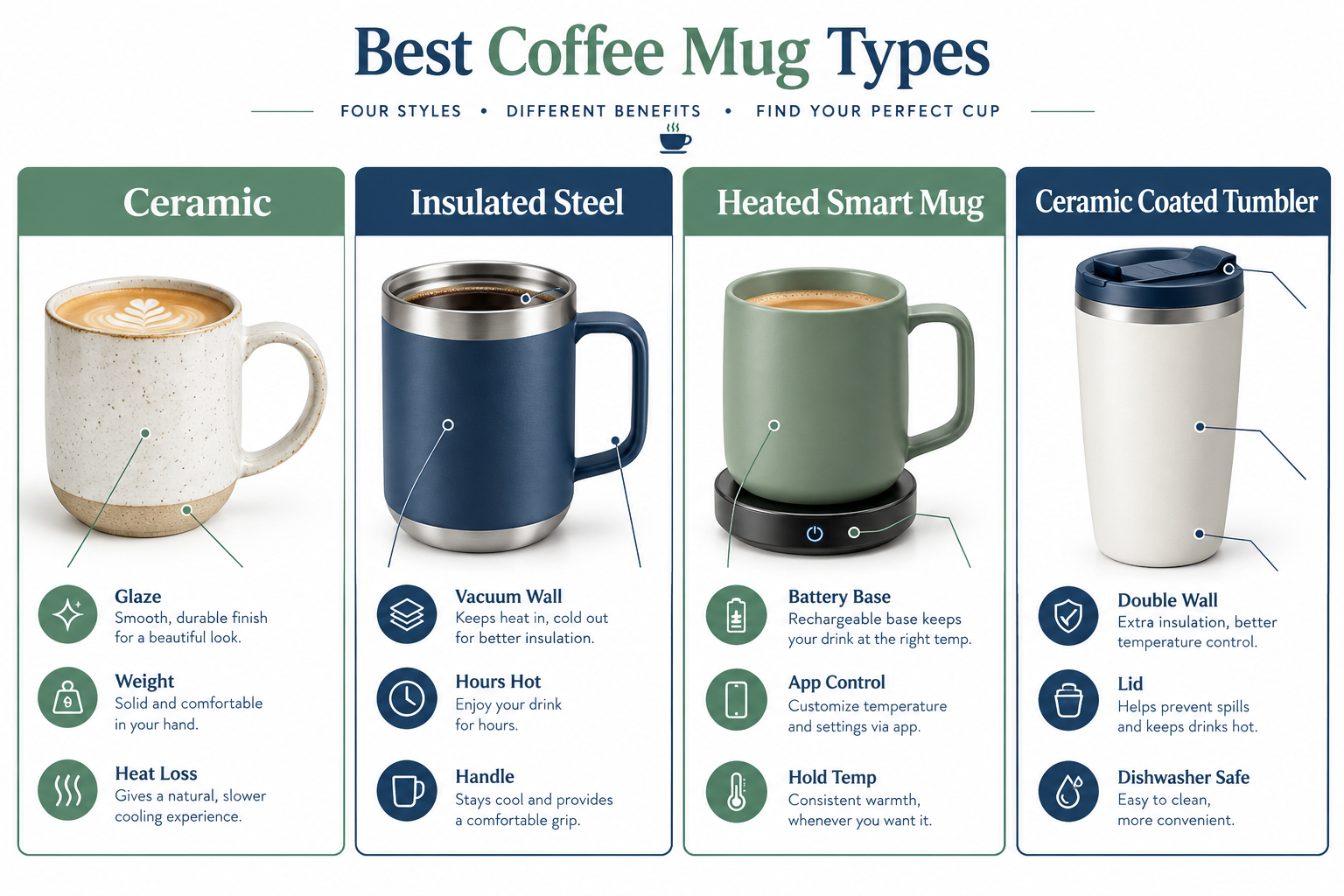
Below are seven buyer types and the mug that fits each one, based on published testing and manufacturer specifications rather than a single "best overall" claim, because no single mug wins every job.
- The slow sipper at a desk: Ember Mug 2. App controlled heat means the last sip tastes like the first.
- The person who wants a real ceramic coffee mug for the kitchen table: KINTO or Hasami. Thin walls, good glaze, honest cafe feel.
- The all day hot coffee drinker: Klean Kanteen TKWide with Café Cap or a YETI Rambler mug. Vacuum insulation beats ceramic every time on hours held hot.
- The commuter who also drinks at home: YETI Rambler Mug. One vessel, kitchen counter to car cup holder.
- The buyer with sensitive hands or grip pain: Fellow Joey. Lighter than steel, double wall glass keeps the outside cool to hold.
- The household that breaks mugs: Corkcicle or any stainless double wall tumbler. Steel does not chip on tile.
- The traditionalist who wants weight and heft on the table: Le Creuset stoneware mug. Heavier ceramic, built to survive years of dishwasher cycles.
Below is a side by side look at eight named mugs worth comparing before you buy.
| Mug | Type | Typical capacity | Best for | Price tier |
|---|---|---|---|---|
| Ember Mug 2 | Heated smart mug | 10 to 14 oz | Desk sippers who drink slowly | Premium |
| YETI Rambler Mug | Double wall vacuum steel | 14 oz | All day heat, travel to home crossover | Mid to premium |
| KINTO Ceramic Mug | Ceramic | 10 to 11 oz | Cafe style home ritual | Budget to mid |
| Le Creuset Stoneware Mug | Ceramic stoneware | 12 to 14 oz | Durable everyday ceramic | Mid |
| Fellow Joey | Double wall insulated glass | 9 to 16 oz | Sensitive hands, lightweight grip | Mid |
| Klean Kanteen TKWide w/ Café Cap | Vacuum steel, leakproof cap | 12 to 20 oz | Longest heat retention | Mid |
| Corkcicle Tumbler | Double wall steel | 16 oz | Households prone to dropping mugs | Budget to mid |
| W&P Porter Insulated Tumbler | Ceramic coated steel | 20 oz | Ceramic feel with insulation | Mid |
What Makes a Good Coffee Mug
A good coffee mug does three jobs at once: it holds heat long enough for you to finish the cup, it feels good in the hand, and it survives your kitchen routine without cracking or leaching a metallic taste into the coffee.
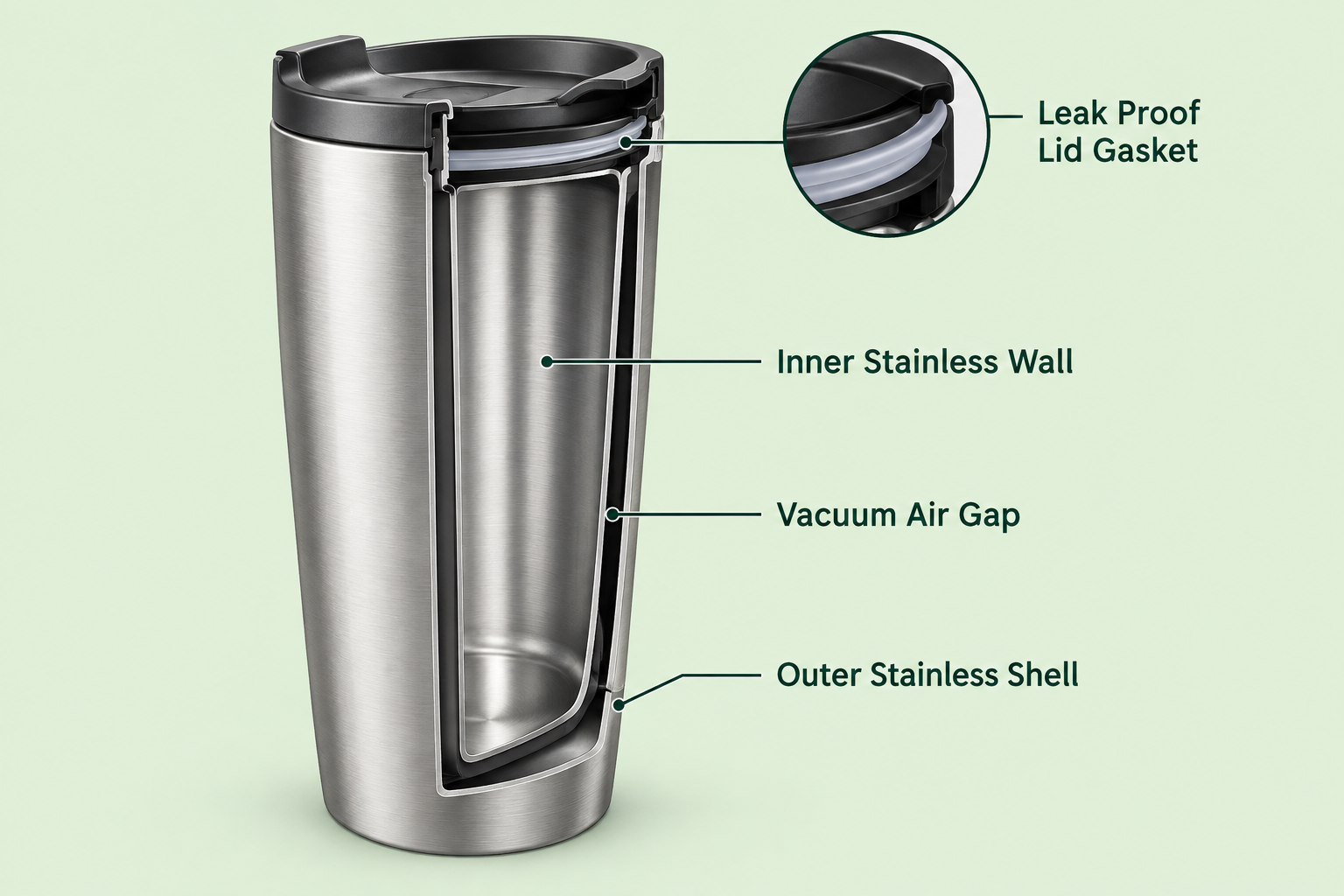
Material decides most of that outcome. Ceramic and porcelain feel warm against the lip and do not alter flavor, but they lose heat fast because the walls are solid and conduct warmth straight out into the room. Stainless steel with a vacuum gap between two walls, the same idea used in a thermos, slows that heat loss dramatically because a vacuum cannot carry heat the way solid material does.
Handle shape matters more than most buyers expect. A wide, D-shaped handle spreads grip pressure across more fingers, which helps anyone with wrist strain or smaller hands. A thin looped handle looks elegant on a shelf and gets uncomfortable by the third refill.
Decision rule: if you finish your coffee inside ten minutes, material barely matters. If you nurse a cup for thirty minutes or more, insulation matters more than anything else on this list.
Ceramic vs Stainless Steel Coffee Mugs
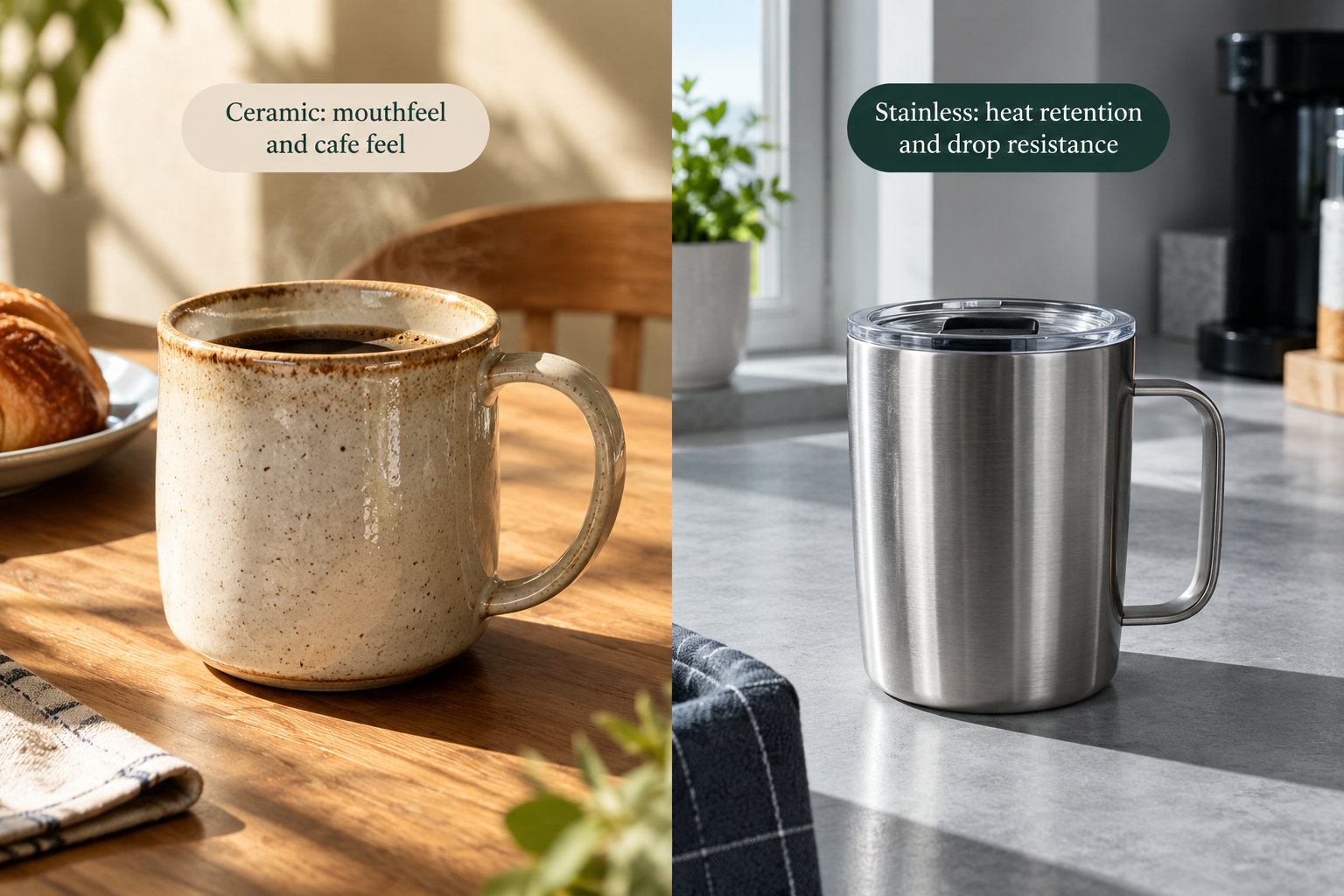
Ceramic wins on taste and feel. Stainless steel wins on heat retention and durability. Neither material is universally better; they solve different problems.
A ceramic coffee mug, including popular home picks like KINTO coffee mugs, Hasami stoneware, and Le Creuset's heavier stoneware line, gives coffee a clean, neutral mouthfeel because glazed ceramic does not react with acids in the brew. Reviewers consistently favor ceramic and thick walled designs for everyday home use because the weight and finish feel deliberate rather than disposable, and because a mug that lives on the counter should look like it belongs there.
Stainless steel, especially in a double wall coffee mug design, holds heat for hours instead of minutes. Testing on the Zojirushi SM-SE stainless mug recorded coffee staying hot for 14 hours, a gap ceramic simply cannot close because it lacks a vacuum layer. The tradeoff is a less "cafe" feel against the lip, and a slightly higher cost per ounce of capacity.
Choose ceramic if: you drink at home, finish your cup within 15 to 20 minutes, and care about how coffee tastes against a glazed rim.
Choose stainless if: you regularly let coffee sit, refill mid-morning, or want one mug that survives a countertop knock without chipping.
Best Insulated Coffee Mug for Hot Drinks (and Keeping Coffee Hot)
The best insulated coffee mug for hot drinks at home is a double wall vacuum steel design, and the strongest performers in 2026 testing held coffee at drinkable temperatures for six to fourteen hours depending on the model and lid.
Low Key Coffee Snobs tested the Klean Kanteen TKWide with Café Cap in August 2026 and recorded coffee cooling from 203°F to 108°F over eight hours, which the reviewer still called a usable drinking range for most of that window. That is the practical ceiling for passive insulation: no active heat source, just a sealed vacuum gap doing the work.
For an even longer hold, Business Insider's 2026 testing put the Zojirushi SM-SE at 14 hours of retained heat, the longest documented figure among mugs covered here. The YETI Rambler mug and Fellow Joey both use the same double wall principle at more modest hold times, trading a bit of duration for a lower price or a lighter feel in the hand.
If you want the ceramic look without giving up insulation performance, the W&P Porter Insulated Tumbler pairs a ceramic-coated interior with a metal shell, and reviewers name it a strong ceramic-feel alternative with a 20 ounce capacity and a splash resistant lid.
Common mistake: buying an insulated mug without checking the lid design. A screw-on cap holds heat longer than a snap lid because it seals tighter, but it also takes two hands to open, which matters if you are pouring while driving or juggling a laptop bag.
Edge case: insulated steel mugs can make coffee taste slightly flat if left sealed for hours, because trapped steam changes how aroma compounds reach your nose. Popping the lid for thirty seconds before drinking helps.
If you are still deciding what beans deserve that extra hold time, our guide to choosing the best coffee beans for home brewing covers what actually survives a long hot hold versus what tastes best fresh.
Heated Coffee Mug With Battery: Ember, Nuwave, and the Smart Mug Case
A heated coffee mug with battery power does not heat cold coffee quickly. It holds a hot drink at a chosen temperature for as long as the battery lasts, which is a different job than insulation and worth understanding before you spend $100 or more.
HGTV's 2026 roundup of self heating smart mugs names the Ember Temperature Control Smart Mug 2 the strongest overall pick in the category, citing its app controlled temperature, automatic sleep function when the mug sits empty, and a design built for desk use rather than travel. Typical prices for this class of heated mug run from roughly $100 to $130, well above ceramic or passive insulated options.
A newer entry, the Ember Mug 3, drew mixed hands-on results from Engadget in late 2026. The reviewer called it "brimming with potential" but flagged a real flaw: holding coffee at 140°F for an hour led to a loss of fruity top notes and a more bitter, over-extracted taste. That is a mechanism worth knowing before you set the temperature dial as high as it goes. Heat keeps driving extraction even after brewing ends, so a mug held too hot for too long can quietly cook a delicate single origin the same way a forgotten pot on a burner does.
Independent reviewers also point out a common misconception: Ember mugs are built to maintain a fresh hot brew at your preferred sipping temperature, not to warm up a cup that already went cold. One 2026 review specifically questioned whether the roughly $130 price holds up against cheaper insulated alternatives for buyers who mainly want "still hot at noon" rather than precise app control.
A mid-priced alternative, the Nuwave Precision heated coffee mug, hit its lowest price of the year in a promotion around September 25, 2026. Coverage highlights its vacuum insulated stainless build, which keeps drinks warm even with the active heating turned off, positioning it between a passive insulated mug and a full smart mug.
Choose a heated coffee mug if: you sip slowly at a fixed spot, like a desk or a reading chair, and you want the exact same temperature at sip 20 that you had at sip one.
Skip it if: you move around the house or commute, since these mugs depend on a charging base and are not built for jostling in a bag. If you want to see how temperature changes flavor in more detail, our guide to understanding coffee tasting notes explains why over-extraction dulls the brighter notes first.
Coffee Mug Sizes and Capacities Explained
Coffee mug capacity for home use runs from about 6 ounces for a straight espresso to 20 ounces for a milk-heavy latte, and the right size depends on the drink, not the counter space.
- 6 to 8 ounces: demitasse and espresso cups, plus compact everyday mugs favored for keeping black coffee hot without a big surface area exposed to air.
- 10 to 12 ounces: the standard home coffee mug size, matching most drip coffee and pour over servings.
- 14 to 16 ounces: common for a large morning coffee or a small latte, and the size where insulation starts to matter more because there is more liquid to keep warm.
- 18 to 20 ounces: milk drink territory. The W&P Porter and many YETI Rambler mug sizes sit here, built for cold brew and latte volume as much as hot black coffee.
Decision rule: match the mug to your actual drink, not your aspirational drink. A 20 ounce mug filled with 8 ounces of espresso-based coffee loses heat faster because more surface area sits exposed to air relative to the liquid inside.
If you are experimenting with bigger milk drinks at home, our collection of coffee recipes to try is a good next stop for sizing your mug to the drink you are actually making.
How Much Should You Spend on a Quality Mug
A quality ceramic coffee mug for home use runs $10 to $30. A quality insulated steel mug runs $25 to $45. A heated smart mug runs $100 to $130. Spend more only where a specific, checkable feature justifies it.
Are expensive coffee mugs worth it? Sometimes. A $130 Ember Mug 2 earns its price if you genuinely sip slowly and care about a consistent temperature; the app control and auto-sleep function are real engineering, not marketing gloss. A $30 ceramic mug from KINTO earns its price through wall thickness and glaze quality that a $6 mug from a big box store will not match after a year of dishwasher cycles.
Where the premium does not hold up: paying $40 for a "designer" ceramic mug with no better glaze, thicker walls, or handle design than a $15 alternative. The name on the bottom of the mug does not change how it holds heat.
Common mistake: assuming a higher price always means better insulation. Klean Kanteen's mid-priced TKWide outperformed some pricier competitors in independent testing simply because of lid design, not sticker price.
For a broader look at building out a full home setup around your mug, the advanced coffee brewing equipment buying guide is worth a read before your next upgrade.
Coffee Mug That Won't Break Easily (Do Ceramic Mugs Last Longer Than Plastic?)
Stainless steel mugs are the most break-resistant option for home use, followed by thick stoneware ceramic, with thin porcelain and cheap plastic near the bottom of the durability list.
Ceramic mugs do not fail from age. They fail from a single drop on a hard floor, which makes durability more about household habits than material science. A Le Creuset stoneware mug survives years of dishwasher use precisely because the walls are thick, but it will still chip if it hits tile at the wrong angle.
Do ceramic mugs last longer than plastic? In terms of daily wear, yes. Ceramic does not scratch, cloud, or absorb odors the way cheap plastic does over months of hot liquid contact, and it does not warp in a dishwasher's heated dry cycle. Plastic mugs last fine for travel or kids' use but tend to pick up stains and smells that ceramic and steel resist.
Choose a break-resistant mug if: you have young kids, a busy kitchen, or a habit of setting mugs down without looking. Corkcicle and other double wall steel tumblers solve this cleanly.
Choose ceramic if: breakage risk is low in your kitchen and you want the better mouthfeel back.
Best Coffee Mug for Sensitive Hands
The best coffee mug for sensitive hands or limited grip strength is a lightweight double wall design with a wide handle, such as the Fellow Joey, rather than a heavy stoneware mug or a bare metal tumbler that transfers heat to the palm.
Weight matters more here than most buyers expect. A full ceramic mug can weigh close to a pound with coffee inside, which strains a wrist with arthritis or tendon pain over a full morning of refills. Double wall glass or steel keeps the exterior cool to the touch even when the coffee inside is near boiling, because the vacuum gap blocks most of that heat from reaching the outer wall.
Decision rule: if grip pain or wrist strain is a daily concern, prioritize a wide D-shaped handle and a mug under 10 ounces of empty weight over any other feature, including insulation time.
Who should skip it: anyone who wants maximum heat retention for an all day hold. The lightest, most hand-friendly mugs are rarely the same models that top the 14-hour heat retention charts.
Coffee Mug Alternatives to Ceramic
Coffee mug alternatives to ceramic include double wall glass, stainless steel tumblers, and ceramic-coated steel hybrids, each solving a limitation that plain ceramic has.
- Double wall borosilicate glass (Fellow Joey and similar designs) shows off coffee color while insulating better than single wall glass, popular for pour over and cold brew alike.
- Stainless steel double wall tumblers (YETI Rambler mug, Corkcicle, Klean Kanteen) trade the ceramic feel for hours of heat retention and drop resistance.
- Ceramic-coated steel (W&P Porter) tries to give both: a ceramic-like interior finish over an insulated metal shell.
- Enamel-coated steel or cast iron mugs, less common at home, offer a rustic look with decent durability but poor insulation.
If you brew a lot of cold coffee alongside hot, double wall glass and steel both work well for iced drinks too. Our guide on making the best cold brew coffee is a useful companion if your mug rotation needs to cover both hot and cold routines.
Common Mistakes When Buying a Coffee Mug
Most coffee mug buying mistakes come from matching the mug to the drink volume, not the actual drinking habit that determines heat loss and comfort.
- Buying based on looks alone. A beautiful glaze does not tell you anything about wall thickness or heat retention.
- Ignoring the handle. A cute thin handle becomes a real annoyance by the third cup.
- Assuming "insulated" always means the same thing. Double wall vacuum steel and single wall foam-lined plastic both get marketed as insulated, but only one actually slows heat loss for hours.
- Overbuying capacity. A 20 ounce mug filled with 10 ounces of espresso drink cools faster than a properly sized 10 ounce mug, because more empty air space accelerates heat loss.
- Setting a heated mug too hot for too long. As Engadget's testing on the Ember Mug 3 showed, holding coffee at 140°F for an extended period can strip fruity notes and push the cup toward bitter.
Best Coffee Mug for Travel vs Home
The best coffee mug for travel is a sealed, leakproof, drop-resistant design like a YETI Rambler mug or a Klean Kanteen with a Café Cap. The best coffee mug for home is an open-top ceramic mug or a comfortable insulated tumbler without the bulk of a travel lid.
Travel mugs need a locking or screw-on lid, a flat bottom or handle that fits a cup holder, and a shell that survives being dropped on pavement. Food Network's coverage of travel mugs highlights the YETI Rambler tumbler and travel mug line specifically for double wall vacuum insulation and rugged build quality suited to daily transport.
Home mugs get to skip all of that. An open top lets aroma reach your nose while you drink, which matters more for flavor than most people realize, and a lighter design without a locking lid is simply more pleasant to hold at the kitchen table.
Decision rule: if the mug leaves the house with you most days, buy for the lid and the drop test. If it lives on your counter, buy for the pour and the feel against your lip.
Frequently Asked Questions
What is the single best coffee mug for someone who just wants one mug? A mid-size double wall stainless mug, such as a YETI Rambler mug or Klean Kanteen TKWide, works for most people because it handles both a quick morning cup and a slower one without failing either job.
Is a ceramic coffee mug better than stainless steel for daily use? Ceramic is better for taste and feel if you finish your coffee within about 20 minutes. Stainless steel is better if you routinely let coffee sit for an hour or more.
Do heated coffee mugs actually work? Yes, for their intended job. An Ember Mug 2 or similar heated coffee mug holds a set temperature for a hot drink already in the cup. It does not quickly reheat coffee that has already gone cold.
How long does a good insulated mug keep coffee hot? Strong performers held coffee in a drinkable range for six to eight hours in independent 2026 testing, with the top model reaching 14 hours under test conditions.
Are KINTO coffee mugs worth the price over a basic ceramic mug? KINTO and similar designer ceramic mugs tend to have thinner, more even walls and better glaze durability than budget mugs, which shows up over months of dishwasher use rather than on day one.
What size coffee mug should I buy for lattes at home? Look for 14 to 20 ounces if you regularly add steamed or frothed milk, since milk volume adds up fast on top of the espresso or coffee base.
Conclusion
The best coffee mug is not one product. It is a match between how you actually drink coffee and what a material can physically do. Ceramic gives you the best flavor experience for the first stretch of a cup. A double wall coffee mug in vacuum sealed stainless steel gives you hours of held heat that ceramic cannot touch. A heated coffee mug like the Ember Mug 2 solves a narrower problem: holding a chosen temperature for someone who sips slowly at one spot all morning.
Start with your actual habit, not the prettiest option on a shelf. If you finish coffee fast, buy ceramic and enjoy it. If you nurse a cup for an hour, buy insulated steel. If you sit at a desk for a long stretch, the extra cost of a heated mug might finally be worth it. Better coffee starts with better answers, and that includes the vessel it lands in.
Keep Exploring Coffee Rank IQ
- Coffee Rank IQ home: reviews, brewing guides, and coffee science
- Best Travel Coffee Mug That Keeps Coffee Hot for Hours
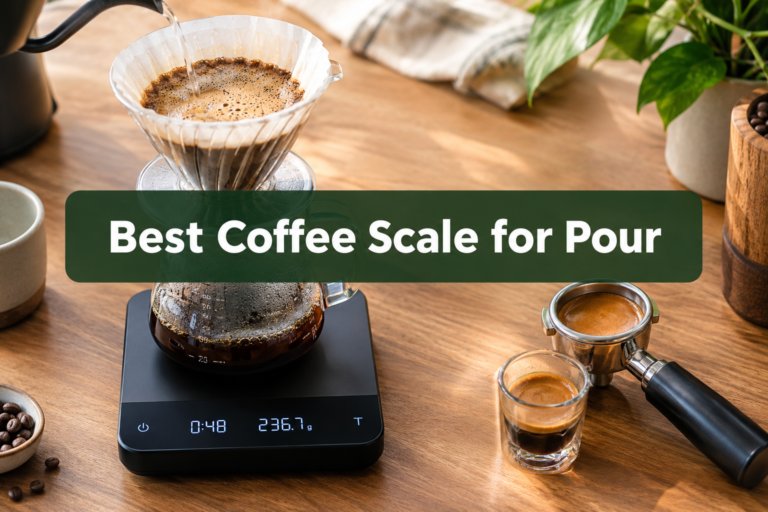
- Best Coffee Scale for Pour Over and Espresso…Timer Included
- Best Coffee Storage Container to Keep Beans Fresh Longer
- Best Light Roast Coffee for Bright, Fruity Cups
References
- www.lowkeycoffeesnobs.com/best-coffee-mugs-to-keep-coffee-hot
- www.reviewed.com/cooking/best-right-now/best-coffee-mugs
- www.nytimes.com/wirecutter/reviews/our-staffs-favorite-mugs
- shop.tiktok.com/us/k/insulated-ceramic-mug
- www.businessinsider.com/guides/kitchen/best-coffee-mug
- www.goodhousekeeping.com/what-to-buy/g44904318/best-coffee-mugs
- www.healthline.com/nutrition/best-coffee-mugs
- www.hgtv.com/shopping/product-reviews/best-self-heating-mugs
- www.foodnetwork.com/how-to/packages/shopping/product-reviews/best-travel-coffee-mug
- www.engadget.com/2271732/ember-mug-3-hands-on/?zsource=yahoo